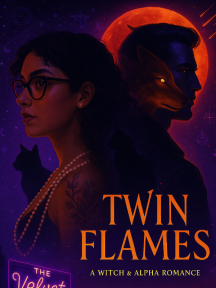
content


(Luna’s POV)
The first thing Luna Estrella Ávila-Batrez felt was weight. A heavy, vibrating weight sprawled across her chest, pressing into her ribs until she stirred awake. Chuy’s paw flexed lazily against her shoulder, right where his paw print was inked in black on her skin.
The tattoo tingled as if reminding her—protector, familiar, shadow.
Luna shoved her glasses onto her face and glared at him. “You’re not even sorry, are you?”
The cat blinked golden eyes and yawned, his tongue curling like flame.
Her apartment above her grandmother’s house was small but alive, cluttered with books and crystals, dried herbs strung in neat bundles, the scent of sage clinging to the air. The floor creaked under her as she padded toward the stairs, Chuy trotting behind her with the swagger of someone who ruled the world.
From below came the sizzle of beans and the crackle of a radio spilling old boleros. Abuela Batrez’s voice rose and fell between gossip and prayer, the same cadence Luna had grown up with.
The kitchen glowed with morning sun. Abuela stood at the stove in her apron, gray braid swinging, spatula moving with warrior precision as she flipped tortillas. A plate of pan dulce sat covered in a towel, steam rising.
“¡Mija!” she exclaimed without looking. “You should’ve come with me last night. Your tía Leti nearly started a novela at the casino.”
Luna sank into her chair, curls falling into her face. “What now?”
“She lost twenty dollars,” Abuela said, scandalized. “Twenty. And told the slot machine it was cursed. When a woman tried to sit next to her, your tía accused her of stealing her luck. They had to drag her out, screaming like she was robbed by the Virgen herself.”
Luna nearly spit her cafecito. “Again?”
“Banned for a week.” Abuela rolled her eyes. “Already asked me to drive her back when it’s over. Esa mujer…”
They laughed until their stomachs hurt, but the mood shifted when Abuela set down the spatula. Her voice lowered, the air thickening.
“Luna.” She reached across the table, her hand warm, weathered. “Protect your aura today.”
Luna stilled. “Why?”
Abuela tapped her chest. “My bones feel heavy. That means change. Sometimes good, sometimes bad. But always change. You were born for it. Born in fire, under fire. But even I don’t know who wants to protect you, and who wants to harm you.”
Chuy leapt into her lap, paw pressing again against her tattoo, his golden eyes flicking between them like he understood.
Luna forced a smile she didn’t feel. “I’ll be careful.”
Abuela nodded but didn’t release her hand. “You were never meant to be ordinary. Remember that. The world will want pieces of you. Don’t let anyone take more than you’re willing to give.”
Luna squeezed her grandmas hand. “I understand, but sometimes I wish I didn’t have to hide who I truly am, I just want normal, i sometimes hate that most I care about were chosen by the 3 main gods to protect me.’
Abuela gave her a kind smile. “ ay my love, you will one day find just that but for now just try to blend in and you never know maybe today is the day..” the sound of the door opening stopped abuelas speech. Your Tia Leti walking in yelling about the neighbor she had beef with since 2025.
‘As much as I would like to hear how Socorro took your third husband Tia, I have to meet Erika and Walter for brunch before work.” She kissed both ladys on the cheek good by leti reapeting the same thing abuela said about her aura. Trailing behind was chuy who never left her side.
Café Dulce breathed sugar into the afternoon. Glass cases glowed with conchas and orejas and little domes of custard that looked too perfect to disturb. Luna slid into the chair across from Erika García and let the café’s warmth soften the edges of Abuela’s morning warning. Erika’s laughter did the rest.
“You would’ve died,” Erika said, palms flying. “We were candlelight-and-soft-music, and then Walter says—‘let’s swing by poker night.’ Swing by. Like it’s a grocery store.”
Walter, mountain-broad in his faded firefighter jacket, lifted his coffee. “They had wings and beer.”
“Two of his only love languages,” Luna said.
“And I’m fluent,” Erika shot back, then leveled a glare at her husband. “But then, then, it’s shirts off, arm-wrestling on a pool table, and some half-remembered wolf howl they found on TikTok.”
Walter looked undeservedly proud. “I won.”
“He won.” Erika rolled her eyes, but her mouth tilted, betraying a smile. “Then he scooped me up like a romance-novel cover and carried me out. Everyone clapped. I wanted to sink into the floor.”
“You loved it,” Walter murmured, not looking at her, grin tucked into the corner of his mouth.
Erika’s chin lifted. “I plead the Fifth.”
Luna laughed, something inside her unspooling. Their chaos worked. Fairy brightness braided to gargoyle steadiness; spark and stone, choosing each other again and again. Across town, in covens and packs and houses shaded with vampire velvet or fae ivy, couples crossed species without a second thought. Even humans were sometimes chosen. In the world after the Awakening, what mattered wasn’t blood. It was bond.
Chuy hopped into the empty chair like he had a reservation, tail coiled delicately around his paws. He peered into Luna’s cup as if coffee were a scrying mirror.
“Don’t even think about it,” Luna warned.
Chuy’s whiskers twitched, unimpressed.
Erika leaned forward. “Are you performing tonight?”
“Rehearsal first,” Luna said. “Closed-to-the-public booking. Kenny says it’s for a VIP—political, I think. Bachelor thing.” She lifted a shoulder. “At least I get the pearls tonight.”
Erika clasped her hands. “The pearls. I live for that number.”
Walter set his cup down. “You safe there?” It was casual, but not. “Closed event, political types—sometimes attracts the, you know, twitchy kind.”
“Kenny’s tighter than a bank vault,” Luna said. “And The Velvet Veil’s warded for days like this. Besides, I’ve got Chuy. And my spine.” She tapped the amulet at her throat, small and moon-smooth. “And this.”
Walter nodded, satisfied, though his stone-gray gaze softened around the edges when he looked at her. He had a good firefighter’s read on danger, the gargoyle in him drawn to roofs and ledges, to standing firm while the world burned and people ran beneath him.
Luna lifted her cup for a final sip. Chuy, traitor, slid closer to Walter because Walter always fed him crumbs when Erika wasn’t looking.
They stepped into sunlight and sunglasses, the afternoon bright enough to ring, and the street moved around them in the lazy tide of weekday errands—nannies, delivery drivers, a vampire in linen buying flowers like sin could be cleaned with petals. The kind of day that made you think nothing bad had ever happened anywhere.
Then he turned the corner.
Tall. Broad. Black leather broken in just right, white T-shirt catching the light at his throat, boots that actually walked places. Sunglasses hid his eyes, but confidence doesn’t need irises. He moved like gravity owed him money.
They met in the narrow stretch where shade from the awning cut across the sidewalk like a blade. Luna stepped left. He did, too. She slid right. He slid right. Walter disguised a bark of laughter as a cough; Erika pressed her lips together, already sparkling with mischief.
“Careful,” the man said, calm and precise, like he’d practiced that voice since childhood. “Some of us actually have places to be.”
Luna lifted her chin. “And some of us don’t mistake a public sidewalk for their personal runway.”
A beat. Walter’s not-even-trying-to-hide-it grin. The man’s mouth ticked—interest? Annoyance? He tilted his head the smallest degree. “You’re bold. Most people don’t talk to me like that.”
“That’s because most people don’t know how to curse someone properly,” she said, face unblinking, as if she were discussing the weather.
“Curse me?” He sounded amused. Or curious. Or both.
“One little hex,” she murmured, leaning just close enough that his cologne threaded the air with cedar and something darker, “and your hairline starts receding tonight. By the weekend? You’ll look like your grandfather.”
Walter wheezed. Erika’s hand flew to her mouth.
The man’s smile sharpened. “Guerrero men don’t go bald. Good genes.”
“Every man thinks his bloodline is stronger than magic,” Luna said, and brushed past, shoulder to shoulder. If he hadn’t been wearing sunglasses, she might’ve seen his eyes. If she had, things might’ve gone differently. But the world enjoys a good delay.
Chuy flicked his tail and tapped one boot, delicate and disdainful. The man looked down. The cat stared back like a duelist. For half a heartbeat, something charged moved between them, like static before a lightning strike.
Then it was gone.
He walked on, chuckling under his breath—“Who the hell curses a hairline?”—and the street filled in behind him as if a wave had broken and retreated.
Erika leaned into Luna, whispering urgently. “Do you know who that is?”
“Some leather-jacket peacock with a trust fund,” Luna said, keeping her tone cool even as her pulse accused her of caring.
Walter watched the retreating line of the man’s shoulders. “That’s Johnathan Rey Guerrero IV.”
“Never heard of him,” Luna said, and meant to end it there.
But the name settled like a coin at the bottom of a well, and her bones felt one ounce heavier than they had a moment earlier.
They hugged outside the café. Erika kissed both of Luna’s cheeks and promised to send pictures of a brand-new pair of heels (“gargoyle-proof,” she said), and Walter pressed a second coffee into Luna’s hand and told her to call if the night scratched wrong. He had that firefighter advisor tone that made people comply without realizing it. She promised, and meant it.
On her way home, she did one tarot reading in the tiny strip of shade outside a plant shop—young couple, human and vampire, fingers intertwined like they’d been welded. They wanted to know if their parents would come around. Luna smiled and told them yes. Not because the cards demanded it, but because the world has learned to bend where love stands long enough. She slid a charm into the vampire’s palm, a sliver of silver wrapped in rosemary thread, to ease the old hunger; the human tucked a sprig of basil in her pocket like she’d been given a meadow.
Back upstairs in her apartment, Luna showered the café sugar from her skin and brushed lotion into her legs until they gleamed. She ran oil through her curls and then twisted them up for the wig she’d wear later. She dotted perfume at the hinge of her jaw and the soft pulse inside each wrist—amber and something moon-cool. Chuy watched from the dresser with the somber focus of a priest.
Her phone buzzed. A text from Kenny.
Kenny: Hija, be early. Club closed. VIP. Wards reinforced. You’re in pearls. Keep your aura tight.
She typed back a heart and a cat and said a quiet little prayer that didn’t belong to any one god. The kind you say to air and ancestors and whoever’s listening with clean hands.
Two doors down, Abuela hummed with her radio. Across the way, her mother had a line of laundry pinned like flags, towels snapping messages to the street. One block over, her father leaned into a car hood and laughed at something the neighbor said about the Dodgers. Mexico on one side, El Salvador on the other, and Luna held like a wish between them—close enough that she could still step into either kitchen, but far enough to decide her own door.
She touched the pawprint tattoo on her shoulder, the ink warm under her fingers. “Okay,” she told herself, to the mirror, to the cat, to the sweet humming walls of home. “Let’s go be the moon.”
Chuy blinked approval. Or absolution. Or both.
The Velvet Veil wore night even when the sun was up. Its sign glowed violet against the first wash of dusk, each magnetic letter curling like smoke. The bouncer nodded her through without a word. The foyer knew her perfume; the corridor knew the rhythm of her heels. Luna’s pulse slowed when she crossed the threshold, the way a swimmer’s does when their head finds air.
Kenny met her under the chandelier with his arms already open. His smile was a room of its own—wide and warm and threaded with mischief. The Tikbalang blood shimmered in him the way heat does above asphalt; he could be dangerous if he chose. He didn’t. He’d been caldo-chosen—marked to guide others toward good—and for years that had meant standing between Luna and anyone who mistook her light for permission.
“My star,” he said, kissing both her cheeks. “My flame. My headache. You ate, yes? Or did your abuela force a second breakfast?”
“Don’t pretend you wouldn’t have taken a plate,” Luna said.
“Of course I would.” He sobered a shade. “Wards are thick tonight. I layered three extra binds on the doors. This is a closed event. Political. Bachelor party. The groom’s cousin is…someone.” He lifted a shoulder. “Important enough that security’s been sniffing around all afternoon.”
The word sniffing made a string in her spine hum. She nodded. “I’ll keep my aura tight.”
“Good girl. And your amulet.”
“Neck and heart,” she said, touching it. Kenny’s eyes softened the way Walter’s had, then sharpened again the way good guardians’ do. He let her go only when he felt her steady from the inside out.
Backstage, The Velvet Veil became cords and bulbs and the scent of hairspray; a low hum of women slipping into armor the world would call costumes. Luna moved in the familiar choreography of transformation: lotion, shimmer, chalk at the heel to keep her from slipping; a whisper of powder along her nose and the tops of her shoulders so the light would love her more gently. The blonde wig settled like a crown; the first string of pearls slid over her collarbone, then the second, then the waterfall that made her chest a constellation.
She watched herself change without vanishing. Luna, who fed the neighborhood cat when Chuy turned up his nose at dinner. Luna, who brewed coffee for Abuela and who kept basil alive on the windowsill. And Selene Noir, who stepped onto a stage and let a room pivot around her, who wielded a siren’s hum and chose to aim it not at taking, but at giving back what mattered.
“Selene Noir,” she told the mirror, not a question. “Let’s go make husbands remember.”
Chuy appeared in the vanity glass as if conjured, tail flicking. He swatted a pearl strand just enough to make it chime good luck.
The house lights fell. The music found its first slow drum.
She stepped into a roomful of breath.
The stage was a dark lake, and she knew exactly where the stones were. One step, shoulder, breath; another, hip, turn, the weight of pearls sounding in time with the beat. She didn’t look at faces. She looked above them, into the place where glamour gathers. The siren hum woke in her ribs, a delicate animal testing the air.
Remember her, she told the room. Remember the vows you meant. Loyalty is a magic, too. Let it hold.
The crowd leaned. They always did. But tonight something else leaned back. Halfway through the number, the hairs along her neck rose like a field before wind. The room adjusted in some pressure she couldn’t place, a tide she hadn’t called.
She found him without meaning to.
Leather jacket. White T-shirt. Sunglasses gone. It would have been nothing if not for the way he watched. Not greedy and not bored. Not the hungry slackness she recognized in the faces of men who wanted to be fed. Something clean and alert and infuriatingly certain. He looked at her like he had seen a map of the building and she had just stepped off the page.
Her heart stuttered. She didn’t miss a beat.
Pearls whispered at her ribs. She moved through the ending, gathered the applause, bowed with her chin a breath higher than she’d arrived. When the curtain kissed her shoulders, her mask fell from her face without being touched. She exhaled like she’d been holding breath since childhood.
Backstage, she set the wig off-center on a foam head and combed it like a pet until her hands stopped wanting to shake. She would have let the Selene in her unspool and curl under a vanity bulb until the world calmed—but Kenny’s knock always knew where to land.
“Private room,” he said softly, not asking, already seeing. “Best man. Groom’s cousin. The important one. You don’t have to—”
“I’ve got it.” She stood before she could become hesitant. She took her body with her, one pearl at a time, and left doubt in the dressing room.
The private room lived behind a second velvet curtain. It was stages inside stages, the way dreams sometimes run into each other. A single chair waited in the amber light, empty in the way a throne is empty before history sits down.
He was there before the music started, which meant he’d chosen to be early. He sat with his legs apart and his hands loose on his thighs, not posed the way men pose when they want to be looked at. He was a place you could set a hand and trust not to fall. He was trouble.
She stepped into the light. He lifted his gaze, and the shift in him was a door.
Up close, he was even more maddening. A mouth made to be smug, made to be softened. Hair pushed back like it wanted to rebel. He began with a smile that said he expected her to say the first word.
She didn’t.
The music found its sultry line. She moved along his chair and let the pearls swing their metronome between them.
“You,” she said finally, flat as a blade laid on a table.
He grinned in recognition, not surprise. “The hairline witch.”
“Careful,” Luna murmured, Selene’s mouth barely curving. “This time I’ll hex something you actually need.”
He laughed, the sound low and pleased and not half as careful as his words had been on the sidewalk. His wolf—because that’s what he was, whatever else—loped close enough to the surface that she could feel the heat of its breath.
“You smell like fire,” he said, quieter now, reverent like a confession. “Like danger. Like something I can’t walk away from.”
No one had ever said that to her in that tone. Half the men who adored Selene adored what she did to them; the other half adored what their adoration let them imagine about themselves. This was neither. This was a statement of fact that landed in her chest like a name.
She made herself smile slower than her pulse wanted. She let pearls stroke his shirt as she turned, her mouth near his ear. “You look like a man who thinks his bloodline is stronger than magic.”
He huffed something that might have been a laugh and might have been a surrender. “Try me.”
The choreography left room for improvisation, the way a map leaves room for wrong turns you choose on purpose. Luna chose. She dragged a line of pearls down the broad ladder of his chest until the teeth of their cold brushed his belt. She didn’t touch him. She didn’t have to. You can wreck a person without ever laying a hand on their skin and still leave them whole. That was the point. That was the mercy.
“Private dances leave little to the imagination,” she said, voice even, as if stating a policy. “But we don’t cross lines.”
“Good,” he said. It was sincere, and odd, and it tilted something inside her into new light. “I like rules. I like the ones you write, especially.”
“Flattery,” she said. “A last resort for men who run out of ideas.”
“Truth,” he said. “A first resort for men who don’t want to lose.”
The banter should’ve been a game. It wasn’t. Or it was, but the rules were older than clubs and bachelor parties and the terrible, tender things humans have taught themselves to want. Something else was playing through them. The Day of Twin Flames had named her once. She didn’t like the idea that it might be naming her again.
“Tell your cousin congratulations,” she said, letting the pearls sweep away and back like a curtain in wind. “And tell him he chose well, if he chose love.”
“He did.” Pride—not performative, not political—moved through his voice. “Mateo always does.”
Mateo. The name tapped at memory; a line she’d read in a policy brief; a speech streaming silent with closed captions while she folded laundry; chatter about a wedding that would look like unity in a headline. She let the thread go. It would either hold or it wouldn’t.
He leaned a fraction forward. “Tell me your name.”
She breathed once, twice, and gave him the one the stage let her give. “Selene Noir.”
He tasted it. Men had made art and ruin of lesser gifts. “Noir,” he echoed softly. “Night that chooses who gets to see.”
“And who gets to sleep,” she said, because she refused to let him carry all the meaning in the room.
The music thinned to its last ribbon. She shifted into the ending, into the pose that made the pearls hang like a vow across her ribs, into a bow that acknowledged an audience of one. When she lifted her head, he was already on his feet, not touching, not crowding—but closer than before, as if the chair had been a word he no longer needed.
“Johnathan Rey Guerrero IV,” he said, offering the full weight of his name like a card slid across felt. Then, softer: “Johnny.”
Names are contracts. She didn’t take it, but she didn’t refuse it. “Good night, Johnny.”
For a breath, neither of them moved. Chuy would have yowled if he’d been allowed in the room; Kenny would have found a joke broad enough to break the tension without shattering it. But they were alone with the last of the music.
He stepped back first. Good. It made it easier to turn.
The curtain kissed her shoulder as she slipped out. The hallway’s dimness swallowed her pupils and the beating of her heart. She had to stop, one hand braced flat against the cool wall, and let the top edge of panic pass. Not fear. Not exactly. The thing that comes right before a storm decides where it’s actually going to land.
“Protect your aura,” Abuela had said.
“Keep your aura tight,” Kenny had said.
Luna smoothed her hand down the front of the wig, the pearls, the slope of her thigh where a ribbon held the last of the costume in place. Her reflection in a gilt-edged mirror did not belong to anyone else. It belonged to the woman who had dressed it.
Back in the dressing room, the other dancers were laughing, decanting themselves from satin and sequins, swapping stories about the bridal shower with the three aunts who tried to climb onstage. Someone had brought empanadas; half had already vanished. The ordinary hum of their voices threaded the needle through Luna, stitching her to the moment again.
Kenny slid in sideways, eyes quick, reading her. “Well?”
She swallowed, and the oddly fragile feeling in her chest broke into a laugh she hadn’t expected. “He asked my name like it was a riddle. I gave him the wrong one.”
Kenny’s mouth tilted. “There are right ones?”
“Maybe just one,” she said, and then shook her head, annoyed with herself for the softness. “It’s fine. It was a dance. It’s done.”
Kenny didn’t call her a liar. He patted her shoulder exactly twice. “Stay for staff meal. Then go home. The night likes you too much right now.”
“I’ll catch the next one,” she said. “I want to walk.”
He didn’t like it, but he let her go. Guardians who were any good learned when yes was safer than no.
She swapped pearls for a denim jacket, Selene for Luna, blonde for her own curls. She washed the last of the glitter from the dimple above her lip and pressed lipstick into a napkin until it left a mouth-shaped ghost. She tucked the amulet under her shirt and pressed two fingers to it for luck.
The hallway to the back door carried the low throb of the club like a second pulse. Outside, the alley smelled like rain that hadn’t started yet. She tipped her face to the slice of sky visible between buildings. The moon—almost full, almost hers—watched back without blinking.
Chuy was waiting at home. Abuela’s radio would be playing a love song that survived three wars and two bad marriages. Her mother’s laundry would have cooled to evening, and her father would be arguing about baseball to no one in particular because sometimes victory matters even when the team is on mute.
Luna stepped into the street and felt it—the shift Abuela had sensed. Not bad, not good. Change. Like a hand on the back between the shoulder blades, applying the gentlest pressure until you move because not moving feels stranger than walking.
She headed toward the corner and did not look back.
Behind her, The Velvet Veil threw its violet light onto the pavement like a spell that didn’t ask permission. In a private room now empty except for the smell of cedar and skinsalt and pearls, a man who had offered her his name stood very still and smiled to himself like a secret he hadn’t decided whether to keep.
Luna touched the pawprint tattoo through her jacket, felt the press of Chuy’s spirit against her palm, and thought of the two verses everyone carried for her—light and shadow, blessing and omen. She was tired of other people’s stories. She wanted, finally, to tell her own.
But the world is not toppled or mended by wanting. It’s moved by feet.
So she moved.
And far above the city, where the clouds hid their embers and angels pretended not to eavesdrop, the Day of Twin Flames rolled in its sleep and smiled, like a prophecy remembering itself.