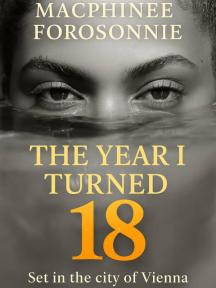
content


The first thing I remember is warmth. Not just the sun or the soft blankets, but the kind of warmth that clings to your chest when laughter surrounds you. My house was loud, full, and alive—the way a home should be when it’s built from love, not just walls. My family was rich, we were comfortably settled. Enough to know we had what we needed, and to enjoy a few luxuries that made life brighter: the scent of fresh bread on a Saturday morning, the soft hum of music spilling from my father’s old radio, and the constant shuffle of my siblings underfoot.
I was the seventh child. Seven children in a house that never slept. My older siblings, ranging from the towering firstborn to the playful sixth, carried a mixture of authority and indulgence that both terrified and comforted me. From my earliest days, I was a witness to their world—a world of teasing, storytelling, quarrels that escalated and dissolved in seconds, and endless games of chase through the compound. And I watched it all with wide, curious eyes, feeling both small and part of something much bigger than myself.
Even as a toddler, I remember being aware of the way people looked at me. I didn’t cry the way other babies did. I didn’t scream. Instead, I observed. I studied. My wide eyes—dark, round, alert—absorbed every movement, every sound, every tiny gesture. People called me “alert” or “wise beyond her years,” but to me, it was only natural. The house always seemed to have a rhythm, and I wanted to understand it.
My father loved music. He hummed through everything—cooking, fixing the gate, walking through the compound. And I, from my very first steps, followed him. I learned to mimic his songs, tap along to his rhythms, even to hum the melodies before I could speak properly. He noticed it early. “You’ve got your mother’s creativity,” he said, resting his hand on my tiny head. “And your eyes… they see far, far beyond.” I didn’t understand the meaning at the time, but his words settled like seeds inside me, waiting to grow.
My mother was everything else. Gentle, fierce, endlessly patient. She guided us through the smallest details of our lives, teaching us not just how to tie our shoes or count our toes, but how to hold our heads high, how to be polite without losing ourselves, how to love without fear. She carried us all in her heart and her arms, and somehow, even with seven children tugging at her every day, she made room for each of us individually. I often think of her hands—long, strong, warm—as she cradled me in those early years.
I was a curious child. I wanted to touch everything, to know everything. I pulled at the strings of cupboards, peeked into drawers, and sometimes, if I was particularly daring, I’d sneak into my father’s study to watch him tinker with his old radio or scribble on scraps of paper. He never scolded me. Instead, he explained what he was doing, asked me questions, and sometimes let me help. My small fingers didn’t always get it right, but the moments of shared discovery became early lessons in creativity and patience.
Family life was chaotic but tender. I remember one particular morning when I was barely two, and my older brother had hidden my favorite doll somewhere in the house. I crawled and toddled through the living room, the kitchen, and into my parents’ bedroom, calling out, “Mummy? Daddy? Where is it?” My mother laughed from behind her cooking, and my father peeked around the corner, feigning anger. The chase lasted an hour, ending with the doll perched triumphantly on my small shoulder, and laughter echoing through every corner of our home.
By the time I turned three, I had begun noticing patterns. The way my father smiled at my mother across the kitchen, the way my siblings bickered but still shared toys, the rhythm of days—school for the older ones, naps for the littler ones, meals, stories, prayers. It all moved like a song, and I felt like a note inside it, small but necessary.
We weren’t wealthy beyond measure, but there was comfort. Enough to have books for me and my siblings, enough to travel occasionally, enough to ensure that when I toddled into life, I felt safe exploring it. Our compound was wide, with grass that tickled bare feet, and a small garden where flowers grew wildly, as if they knew they belonged there. I remember watching the butterflies, tiny bursts of color flitting across the green, and feeling like the world was vast and endlessly fascinating.
Even at this young age, I had a sense of wonder about people and life. When visitors came, I watched them carefully. I memorized faces, voices, scents. I learned to recognize the difference between someone who would smile warmly and someone who would scowl, between hands that would pick me up and hands that would scold. I learned, somehow, to navigate the world with eyes wide open, though I was barely walking.
My siblings, of course, shaped me in ways I would only fully understand years later. The firstborn taught responsibility, though I didn’t know it then—I just knew that when he picked up his books or moved with purpose, I wanted to mimic him. My sisters taught me patience and charm, the soft ways of persuading someone with a smile or a tilt of the head. My younger brothers taught me mischief, laughter, and the unexpected joy of doing something silly just to see someone else laugh. And all of them taught me something more subtle: that life is full, rich, and messy, and that even in chaos, love thrives.
Even in those earliest years, my parents’ attention was never divided in a way that left me wanting. They were attentive without hovering, guiding without smothering. And I, in turn, learned to trust that the world was not always a scary place, that I could explore and stumble and still find safety waiting for me.
And yet… there were hints that not everything was perfect. Sometimes, my father would glance at the clock a little too often, his brows knitting together. Sometimes my mother’s eyes would flicker with worry before she smiled again. I didn’t understand it then. But even as a small child, I could sense when a shadow passed through the light. Life wasn’t always about laughter, no matter how loud the house could get.
I grew aware of my individuality very early. Where the other children often squabbled over toys or attention, I watched. I observed. I considered. When my siblings were loud and competitive, I was quiet but present. My voice was measured, my movements deliberate. I wasn’t shy—I just wasn’t reckless. And in that deliberateness, I learned the first lessons of who I would become: someone who notices, who listens, who thinks before acting, even when the world is chaotic around her.
Of course, I wasn’t always perfect. I threw tantrums like any toddler, screamed when I didn’t get what I wanted, and cried when someone took my toy. But even in those moments, my parents’ love was a shield. They reminded me gently that feelings were valid but actions mattered. That discipline wasn’t punishment—it was guidance. And in those years, I slowly began to understand the delicate balance between freedom and structure.
And here, at the age of three, I learned my first lessons about choice and consequence. The first time I climbed a small stool to reach a book on my own, I fell. Hard. Bruises formed on my tiny knees, but my father’s hands were there immediately, steadying me, checking for tears, murmuring that falling was okay—as long as I got up. That day, I understood that mistakes were not the end, that bravery wasn’t the absence of fear but the courage to rise despite it.
Through all this, I felt a strange clarity, even as a toddler. I didn’t yet know words like “responsibility” or “creativity,” but I understood them in practice. I saw the world as a place full of possibilities, with people moving in ways I could predict yet never fully control. And I learned, even in those earliest days, that observing was a tool, that paying attention could teach more than constant action.
By the end of my third year, I had begun forming my first memories of not just people and objects, but of feelings—moments that left impressions. I remember the taste of mangoes in the afternoon sun, the sound of my mother humming while sweeping the floor, the sight of my father’s laughter as he told an exaggerated story about his own childhood. I remember the warmth of the family dog as it curled around me, the shock of cold water on a hot day, the smell of rain mixing with the earth. I remember a sense of belonging that was more than comfort—it was understanding, awareness, presence.
Even now, looking back, I see how those years shaped the foundation of who I would become. The love, chaos, laughter, and lessons of ages one through three formed a lattice beneath my every choice later in life. They taught me observation, patience, and the quiet power of watching and learning. They taught me to cherish warmth, to recognize safety, to seek out beauty even in ordinary days.
And through it all, I began noticing a certain pattern. Life was unpredictable, full of joy and worry in equal measure. My parents’ love was constant, but not everything around us was. I learned, early, that happiness and difficulty often existed side by side, and that observing both was the first step to understanding the world.
I didn’t yet know about loss, grief, or heartbreak. But I was learning the mechanics of life—the pulse, the rhythm, the laughter, the quiet moments, the small victories. And even then, I could feel it: the beginning of a story, my story, unfolding quietly but with power. The foundations of curiosity, care, and courage were laid in those early years. And the world, even in its tiny corners, began whispering its secrets to me.
But as peaceful as those years were, something was coming — something that would test everything my family had built, everything they had taught me, everything we believed about life, love, and strength.
And none of us were ready for it.