content


The first time Damian Stone saw her, it wasn’t in a ballroom or in the neon gleam of his city. It was in a library no one used after dark, where the lamps hummed and the air smelled like dust and the quiet ache of ambition.
He wasn’t there to study. He was there to escape—thirty minutes stolen from a life built out of obligations and signatures.
And then he saw her.
Sabrina Quinn.
She sat hunched over a scarred oak table, hair spilling forward like midnight, the margin of her battered notebook crowded with furious little notes. A paper cup of vending‑machine coffee stood by her elbow like a dare.
He should have walked on. He didn’t.
“You know that coffee will kill you faster than exams,” he said, because it was easier to be glib than to admit he was curious.
Her head lifted. Sharp eyes. No fear. “Excuse me?”
“You’re on cup three,” he said, half‑smile tugging at one corner of his mouth. “I counted.”
“Do you always stalk women in libraries?”
“Only the interesting ones.”
A beat of silence. Her mouth pressed like she might smile, then didn’t. She tipped her chin at the desk lamp. “You’re blocking the light.”
The smallest beginning. The point at which everything shifted.
---
He returned two weeks later, which he never did. She was in the same chair. He set a coffee on the table, actual coffee, not from a machine.
Her pen stopped. “You again.”
“Me again,” he said, sliding the cup toward her. “Upgrade.”
“What do you want?”
“Your name.”
“Why?”
“Because you’ll be mine one day,” he said, a simple, impossible truth, “and I’d like to know what to call you.”
She should have bristled. Instead she laughed, a clear sound that felt like breaking a window in a room that had been shut too long.
“Sabrina,” she said. “And you’re impossible.”
“Damian,” he answered, leaning in. “And yes.”
They didn’t inch toward each other; they fell.
He took her to hole‑in‑the‑wall diners that didn’t know his name. She taught him to ride the subway without a bodyguard. He taught her to drive his classic roadster, knuckles white while she grinned and gunned it through an empty industrial street at one in the morning.
“You’re terrible at letting go,” she told him, laughing. “Trust the road.”
“I trust you,” he muttered, which was worse and truer.
She didn’t want his last name, his jets, the dark weight of Stone. She wanted the man who listened, who was wickedly competitive at darts and inexplicably gentle with stray cats. For the first time, he wanted to be that man and nothing else.
They fought the night he proposed.
“You decide everything,” she said, storming out of his penthouse, rain already needling the city. “Even how I breathe.”
“Because I have to be three steps ahead,” he threw back, following her into the downpour. “That’s how I survive.”
“I’m not your enemy, Damian!”
“Exactly why I’m terrified.”
Lightning cracked the sky. Cars hissed around them. He stepped into her path. Rain flattened his suit, her dress, the moment.
“I can’t lose you,” he said, voice scraped bare. He sank to one knee in a filthy city street with cabs yowling and water pooling around his shoes. “I don’t have a ring. I don’t have a speech. I only have this—” his throat hitched, “—you. Marry me, Sabrina. Before I ruin it. Before I ruin us.”
Her eyes shone, rain and tears indistinguishable. She hauled him up by the lapels and kissed him hard enough to steal his breath. “Yes,” she whispered against his mouth. “Yes.”
---
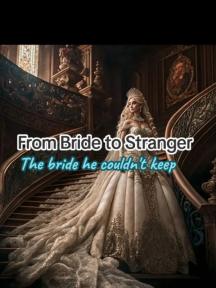
The wedding looked like restraint from afar and felt like exhale up close. A hundred people. White and gold. Music low enough that conversations mattered.
Sabrina came down the aisle with a bouquet of simple lilies and a look that undid him at the bones. He slipped the ring on her finger and his hands shook. When the priest said the words and their kiss sealed them, Damian swore there was nothing in the world that could touch them.
He was wrong.
Eleanor Stone didn’t attend. She sent a note, delivered to Sabrina’s dressing room, written in perfect blue ink.
Enjoy your fairy tale, dear. You will never be one of us. If you try, you’ll regret it.
Sabrina tucked the note away. She told herself she wouldn’t give Damian’s mother the power to sour their day. But the words followed her, a cold breath on the back of her neck.
The reception bloomed into midnight. Lucien made a show of clapping Damian on the shoulder, teeth too white in a smile that didn’t warm. “You’ve stunned them, brother,” he said softly. “Let’s hope they keep clapping.”
Damian ignored the sting, collected Sabrina for one more dance, pressed his mouth to her ear. “Suite’s ready,” he murmured. “I told them champagne, strawberries, the dumb cliché. Humor me.”
“I married you,” she said, laughing. “I’ll survive strawberries.”
Then his father’s head of security found him, urgent. “Sir, Mr. Stone needs you on a call. It can’t wait.”
Sabrina squeezed his hand. “Go,” she said. “I’ll meet you at the hotel. If I wait, I’ll fall asleep on my cake.”
“Ten minutes,” he promised. “I’ll follow.”
“Race you,” she teased, and kissed his cheek.
He watched her leave through a side entrance with one of his drivers and the photographer trailing, veil gathered like a cloud in her hands. He told himself ten minutes wouldn’t matter.
It would matter for the rest of his life.
---
The call dragged. It wasn’t his father; it was Eleanor. “You’ve made a spectacle,” she said, voice like a crystal edge. “You’ve made an error I will spend years untangling.”
“Not tonight,” he said. “Not ever.”
“My son,” she said, a pitying softness he had learned to fear, “I hope you enjoyed your fairy tale.”
He cut the line. He checked his watch. Twenty‑six minutes. He swore and headed for the car.
Midway to the hotel, his driver stiffened. “Roadblock, sir. Police.”
Damian’s phone rang before he could ask. Unknown number. He answered.
“Is this Damian Stone?” The voice sounded official, paper‑thin with tension. Sirens skated faintly in the background. “There’s been a—there’s been an incident on the South Bridge.”
The world narrowed.
“What incident?” he asked, the words dust.
“A vehicle lost control. It went through a guardrail. The car—” the voice paused. “We found a bridal veil and shoe at the scene. Registration matches your wife’s car. We’re still— We’re still searching below.”
He didn’t remember telling the driver to move. He didn’t remember the ride.
He remembered the guardrail bent like a broken rib, the strobing lights, the clatter of radios, the smell of gasoline and river and hot metal. A bouquet of lilies crumpled against an orange cone. A white shoe. A torn half‑veil snagged in twisted steel like a surrender flag.
He went for the edge. Hands dragged him back.
“Mr. Stone, it’s unstable—”
“Get off me,” he snarled, voice not his own. He looked down. The river shoved itself against the concrete pilings, black and indifferent. The crumpled car lay on its side on a spit of rocks below, the trunk peeled open like a tin. The windshield had shattered outward. A ribbon of white silk danced in the current before vanishing.
“Where is she?” he asked a man in a reflective vest.
The man swallowed. “We don’t know yet.”
Divers hit the water. Cables groaned. Searchlights combed. Someone bagged the shoe. Someone else lifted the veil gently, slid it into a clear sleeve and zipped it.
Damian stood there and watched the river refuse to give.
They found scuffs on the asphalt, an arc darker than the rest, the kind tires carve when they’re forced to turn. They found a transfer of black paint on the rear bumper—another vehicle, close enough to kiss. They found a smear on the guardrail that tested for blood. They did not find Sabrina.
At three in the morning, a lieutenant with tired eyes approached. “The current’s strong tonight,” she said carefully. “If—if she went in, we may have to—”
“No.”
“Sir—”
“No,” he said again, quiet and immovable.
They kept searching until sunrise and then beyond it, because he refused to leave. When the divers surfaced again and again, faces gray with cold, empty‑handed, he stared at the water until his eyes burned and there was nothing left to burn.
By noon, Eleanor had arrived in an immaculate black suit and pearls that gleamed like teeth. She didn’t touch him. “Damian,” she said softly, for the onlookers. “Come away.”
He didn’t move.
Lucien came later, jacket slung over a shoulder, hair mussed with theatrics, gaze sliding over the scene like a camera. “Horrible,” he murmured. “Brother, I—Horrible.” He dabbed at his eye with his thumb, but it stayed dry.
Damian didn’t answer him.
In the end, the police made a report with words like “presumed,” “likely,” “no body recovered.” The lieutenant held his gaze and did not flinch. “We will continue the search,” she said. “But you need to go home.”
He went home to the suite prepared for strawberries and champagne and a trail of silk. He sat on the floor in his tuxedo and picked up the hotel’s welcome card and tore it down the middle, then tore it again, because his hands needed to destroy something that wasn’t him.
The call came that evening. “We’re suspending for the night,” the lieutenant said. “We’ll resume at dawn.”
He said nothing and hung up and slid down the wall until the world blurred.
No body. No proof. Only absence.
---
The press said the word tragedy a hundred different ways. An empty coffin—he refused. A memorial—he allowed, because other people needed somewhere to put their flowers. He chose a granite marker in a half‑hidden corner that looked across a sweep of trees. For the inscription, he chose her name and the date with a dash. No end date. He would not write the lie.
He didn’t sleep. He ate mechanically when his body demanded it, swallowed coffee when it didn’t, stared at the door until dawn and again until dusk, waited for the sound of her key.
People tried to help. His CFO. His assistant. His father, who stood in the doorway of Damian’s office and failed to say anything that mattered. Lucien, who sat on the edge of the desk and said, “You’ll survive. We always do.”
Eleanor visited his penthouse two days after the memorial, pressed her gloved fingers together, and said in a voice pitched for sympathy, “You need closure.”
“What I need,” he said, “is my wife.”
“You can’t live in a threshold,” she said, and then, as if she hadn’t rehearsed it, “Let me handle the—aftermath.”
He looked at her and saw the woman who had written a note that told his new wife she did not belong. He said nothing. He didn’t need to.
A week later, a lawyer arrived with a neat stack of papers. Petition to declare death in absentia, on an accelerated schedule “for the good of the company,” for “stability,” for “clarity.” He signed nothing. Eleanor took the petition back with a look of practiced patience that hid something colder.
Time turned viscous. Days folded in on themselves. He went to the office because he was Damian Stone, and empires did not pause for grief. He came home because he was a man who had lost the sound of his own laughter, and grief did not pause for empires.
At night, he went to the marker and stood there with his hands in his pockets like he might be chilly and not hollowed out. He hated the flowers. He replaced them anyway.
On the fourteenth night, he woke from a dream so sharp it took skin—Sabrina turning toward him in lamplight, saying his name like a secret. He went to the kitchen, poured whiskey, didn’t drink it. He opened the drawer where he’d tossed the wedding proofs the photographer had sent to the penthouse hours before the reception ended. He found the shot he couldn’t stop replaying: Sabrina laughing, head tipped back, veil floating.
He tore the photograph cleanly in half.
He didn’t know if he was punishing himself for believing in happy endings or punishing the world for ending his. He put both halves in a tin he’d kept change in as a kid and slid it onto a back shelf, a little reliquary made out of stubbornness and pain.
He slept on the sofa, hand curved around the tin like a talisman.
---
There were details that never settled right, even when the world screeched “accident” so loudly it became a kind of lullaby.
The paint transfer on the bumper that didn’t match any model reported at the scene.
The gouge pattern at the guardrail that suggested a nudge, not a swerve.
The scrap of veil snagged impossibly high, as if hands had placed it there.
And the absence—always the absence—of a body.
He hired investigators. He leaned on police captains who owed him favors. He had his security team reconstruct every camera angle on the route. There were gaps. Cameras offline for “maintenance.” A two‑block blackout where someone had chosen the right night to kill the right feed.
“We’ll keep looking,” his head of security said. “We’ll find whoever did this.”
“Find her,” he said, and his voice came out like a wound. “Or tell me why you can’t.”
They couldn’t. Weeks folded. The river kept its secrets.
Then, because grief makes room for cruelty, the gossip columns wrote their little fiction: that Sabrina had run, that the weight of being a Stone had crushed the girl from nowhere, that maybe the guardrail was a stage, not a grave. Damian didn’t respond. The headlines did their month of damage and moved on to other fresh wounds.
He stayed inside his.
He stopped going to the library. He drove the South Bridge twice—once in daylight to count the seconds between lights and once at night to stand at the place where the guardrail was new and unbent and pretend time was a fabric he could smooth back into place. He counted to twenty‑six and tried to forgive the call that had taken exactly that long.
He failed. He forgave nothing, least of all himself.
---
Lucien lingered on the fringes like a shadow that smiled. He sent whiskey, as if that was kindness. He came to the memorial marker three weeks later and stood beside Damian, hands in pockets, gaze mild.
“I keep thinking how fast it all was,” Lucien murmured. “From vows to—this.”
“Go away,” Damian said.
Lucien tilted his head. “You know what Mother says? That grief breaks us to fit our cages. That you’ll come out of this smaller.” He smiled, a small gleam like a knife. “I don’t think she’s right. I think you’ll come out sharper.”
“Go away,” Damian repeated, and Lucien obeyed, whistling under his breath as he left.
Eleanor called every other day with updates he hadn’t requested. “You can’t keep the apartment exactly as it was,” she advised. “You can’t leave her things—”
“I can,” he said, and disconnected.
Sabrina’s dress stayed on a chair for a month, veil pooling to the floor. On the thirty‑first day, he wrapped them both in tissue and placed them in a cedar trunk because love is not a thing you leave to dust.
He pressed his palm flat to the wood. “Tell me where you are,” he said to an empty room.
The room did not answer.
Spring crouched into summer. The legal petition arrived again with a stack of affidavits and a letter from Eleanor’s counsel advising that “for the sake of succession planning and the health of Stone Enterprises,” a declaration would be prudent. Damian signed the pieces that squared the company and sent the rest back unmarked. The board sighed in relief. The tabloids filed their think pieces. He ignored both.
He went to the river alone. He watched it change colors in the light. He tried to bargain with it, then stopped, because the river did not bargain.
He hired a private search and rescue team out of his own pocket who told him gently, after too long, that if a body had gone in that night, the current would have carried it far beyond their grid. He thanked them and stood by the water and thought, wildly, that no body meant two truths: she could be gone forever, or she could be somewhere he could still get to.
He chose the second because choosing the first would end him.
When he finally slept, he dreamed in fragments. Sabrina’s mouth forming words he couldn’t hear. A hospital corridor he didn’t recognize. A hand—his mother’s?—closing on a door and locking it. He woke sweating and empty and furious at his own mind for offering hope without evidence.
He kept the tin. He kept the halves of the photograph. He kept the veil scrap the police had returned after cataloging, a white ghost coiled in a plain envelope. He kept going.
He learned how to say my wife in the past tense when other people needed him to be understandable. He learned the art of speaking all day and saying nothing at all. He learned how to live with a wound that didn’t scab.
And then—years later—he learned the only lesson that mattered.
She hadn’t died.
She had been stolen.
Because one afternoon a woman walked into his life with Sabrina’s eyes and a scar on her wrist and a son who looked, impossibly, like him. She spoke like a stranger and moved like a blade and lied as if her life depended on it.