content


The fire had burned low by the time Odysseus found himself alone. The Greek camp still stirred with movement guards pacing the line of ships, smiths hammering dull blades back to life, men whispering dreams of tomorrow’s victory. Yet in this small corner, near the edge of the sea, silence ruled.
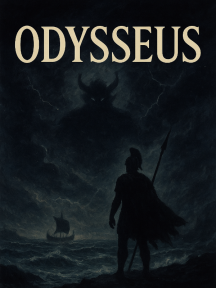
Odysseus sat on a stone, his spear resting across his knees. The salt wind tugged at his hair, and the crash of the waves seemed to echo the storm inside him. His eyes lingered on the horizon, where the moonlight painted the water silver. Somewhere beyond that endless expanse lay Ithaca. Penelope. Telemachus. His world.
But between him and home stood Troy, still stubborn, still defiant, and one child a boy with Hector’s blood in his veins.
He closed his eyes. For a moment he could see the boy as Neo had described him: dark-haired, wide-eyed, innocent. And yet, in that vision, Odysseus also saw something else a shadow lengthening behind the child, stretching forward through the years until it became a man with fire in his hands.
“Will these actions haunt my days?” he whispered, though no one was there to hear him. His voice cracked with the question. “Every man I’ve slain… is the price I pay endless pain?”
The words floated into the night, vanishing with the sea breeze.
He thought of Hector proud Hector, who had stood on the battlefield with courage that outshone even Achilles at times. Hector, who had fought not for pride or glory, but for his family, his city. When Odysseus closed his eyes, he still saw Hector’s last stand, still heard the cries of Troy when their champion fell.
And now, his son remained. A boy. A future. A threat.
Odysseus pressed his hands to his face. “Close your eyes and spare yourself the view,” he muttered, as though the gods themselves might listen. But when he lowered them, the vision was still there. The child. Telemachus’s age. Innocence balanced against prophecy.
His chest ached. How could he raise his hand against one so young? How could he not, if it meant saving his own?
The question gnawed at him like hunger.
Footsteps crunched on the sand. He did not need to look to know who it was.
“You sit in the dark like a man awaiting judgment,” Nestor said, his voice old but unbroken. The elder statesman of their army walked with care, leaning on a polished staff, but his eyes still burned bright beneath his weathered brow.
Odysseus managed a thin smile. “Perhaps I am.”
Nestor lowered himself beside him with a grunt. For a while, neither spoke. The sea filled the silence between them. Finally, Nestor asked, “What troubles you?”
“Do you not feel it?” Odysseus replied. “After all these years the weight of it all? Every life we’ve taken, every city burned, every cry silenced? I wonder… when does the comet become the meteor, Nestor? When does a ripple become a tidal wave? When does a man become a monster?”
The old warrior studied him. “You are weary,” he said at last.
“I am more than weary,” Odysseus said, his voice low. “I am haunted.”
Nestor tapped his staff against the ground, as if striking away invisible doubts. “We have all done things we wish we hadn’t. But war is not a matter of choice it is survival. You are not a monster, Odysseus. You are a man.”
“A man…” Odysseus let the word linger. “I tell myself that, yet the blood says otherwise. How many sons have I left fatherless? How many fathers did I strike down, leaving children to starve? And now now I stand on the edge of something darker. I could spill the blood of a child before he even learns to speak. Tell me, Nestor, is that still a man?”
Nestor’s gaze faltered. For once, he had no answer.
Silence pressed between them until Odysseus rose abruptly, restless. He paced the sand, his hand tightening around the shaft of his spear.
“I am just a man who wants to go home,” he said, more to himself than to Nestor. “After all the years away from what I’ve known… after all I’ve endured… I would trade the world to see my son and wife again.”
His voice cracked at the end. He thought of Penelope weaving by torchlight, her face pale with waiting. He thought of Telemachus, a boy who had grown without a father to guide him, learning strength from absence. That pain his absence was his greatest shame.
“Forgive me,” Odysseus whispered into the dark. He wasn’t sure who he was speaking to Hector, the gods, the unborn man the child might become, or himself. “Forgive me…”
His throat tightened.
Behind him, Nestor finally rose. The old man placed a hand on his shoulder, firm but gentle. “Odysseus, you are burdened because you care. That alone means you have not become a monster. Remember that. Monsters feel nothing. They do not break under the weight of conscience.”
Odysseus did not answer.
He stared out to sea again, and in the waves he saw the reflection of two faces: Penelope, smiling faintly, her patience unyielding; Telemachus, young and eager, looking at him with eyes that held hope.
And in the shadows behind them, another the infant son of Hector, growing, changing, his eyes filled with fire.
The vision tore at him.
He gripped his spear until his knuckles whitened. “When does a man become a monster?” he asked again, his voice raw.
This time, no answer came. Only the endless sea, whispering like the breath of the gods.