content


Atlas had never really paid attention to the pendant until the day it burned against his skin. Before that, it had just been a strange gift from a father he barely remembered—an object wrapped in old cloth and tucked away in a wooden box labeled For when he’s ready.
His mother had given it to him on his thirteenth birthday, her hands trembling slightly as she placed it around his neck. She didn’t explain anything. She didn’t need to. The look in her eyes said enough: she was scared of it, but she believed he needed it more than she feared it.
For two years, he wore it out of habit. Now, he wore it because he didn’t have a choice.
By the time school ended that day, the pendant felt heavier, as if someone had tied a stone to the chain. Atlas pushed through the school gates, eager to go home before the strange prickling on his chest became unbearable again.
The sky was already shifting into its late-afternoon colors—soft gold leaking into pale blue. A few kids laughed near the bus stop, trying to pretend everything in Diamond Gates was normal. Their laughter sounded forced, like an echo of happier days.
Atlas walked faster.
When he reached his street, something felt off again. The houses looked the same, the gardens were still neat, but the silence… it was thicker. His home stood at the end of the row, a small cream-colored house with a slanted roof and a stubborn front door that always got stuck halfway.
He slipped inside and closed the door quietly behind him.
“Mom?” he called.
No answer.
He dropped his bag and walked to the kitchen. Empty. The living room? Empty. Curtains drawn. TV off. He checked her bedroom—neatly made bed, door slightly open, no sign of her.
She had left a note on the dining table.
“On shift at the clinic. Don’t stay out late. Dinner in the fridge.”
Atlas let out a breath he didn’t realize he was holding. Good. At least she was safe.
His chest tingled again.
He looked down.
The pendant glowed—faintly, like a coal hidden under ashes.
His stomach tightened. “Not again…”
This time, he didn’t ignore it. He went upstairs, stepping carefully, the old wood creaking under his weight. When he reached the top of the stairs, he headed straight to the attic door.
He didn’t know why.
Something pulled him there—instinct, or maybe the same voice he’d heard whisper to him yesterday.
He grabbed the dangling rope, pulled the attic stairs down, and climbed into the dusty room.
The attic smelled like old books, cedar wood, and forgotten secrets. Sunlight leaked through the tiny window, catching particles of dust that floated like tiny stars.
Atlas crouched near a stack of boxes. His pendant pulsed once.
Then twice.
Then silently, the lid of a nearby box pushed itself open.
Atlas jumped back so fast he hit his shoulder on a beam. “Ow—okay, nope. Nope. That’s not normal.”
The box didn’t move again.
Carefully, he reached toward it and lifted the lid fully.
Inside were papers—yellowed pages, torn edges, old ink. A thick leather journal lay on top, its cover cracked and faded from time. The moment Atlas touched it, the pendant warmed again, as if encouraging him.
He opened the journal.
The handwriting was shaky yet familiar.
He had seen it before.
On his father’s old birthday cards.
Atlas’s breath caught in his throat.
The first page read:
“To whoever is reading this. If it is my son, then I’m sorry. I tried to keep you away from this.”
Atlas’s hands trembled as he continued.
“The Aethron Core is failing. The shadows have returned. And the boy marked by the ancient sign will be the one the darkness seeks first.”
He looked down at his wrist.
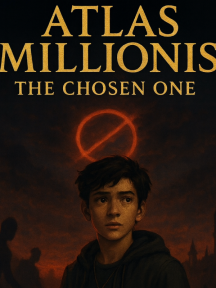
The symbol—the same one he’d seen in the sky—was faintly glowing beneath his skin.
His heartbeat quickened.
He turned the page, scanning quicker.
“If you are reading this, Atlas, then they have found our town again. And the pendant you wear is not a necklace. It’s the Key of Aethron, forged to protect the chosen one and guide him to the Core’s Source.”
He froze.
Key?
Chosen one?
No. Impossible. Those were stories—warnings told by elders, myths used to scare children into behaving.
Atlas shook his head. “I’m not chosen for anything. I can barely pass math.”
He kept reading anyway.
“When the pendant awakens, you must not ignore it. The shadows will follow you. They can smell the Light inside you. Find the remaining clues. Trust no one who walks without a shadow.”
Atlas blinked.
What was that supposed to mean?
A floorboard creaked behind him.
He spun around instantly, heart in his throat, expecting to see his mom—or worse, something with glowing eyes.
But there was nothing.
Just the dim attic air and the faint sound of the wind outside.
He looked back at the journal.
One final line was written at the bottom of the page, the ink darker, as if pressed harder:
“Son… they will come for you first. Be ready.”
Atlas slowly closed the journal.
His father had known all along.
About the pendant.
About the shadows.
About him.
The pendant warmed again—hotter this time.
And then he heard it.
Not from outside. Not from the attic.
From inside his own mind.
A quiet whisper, unmistakable:
“They are already here.”